
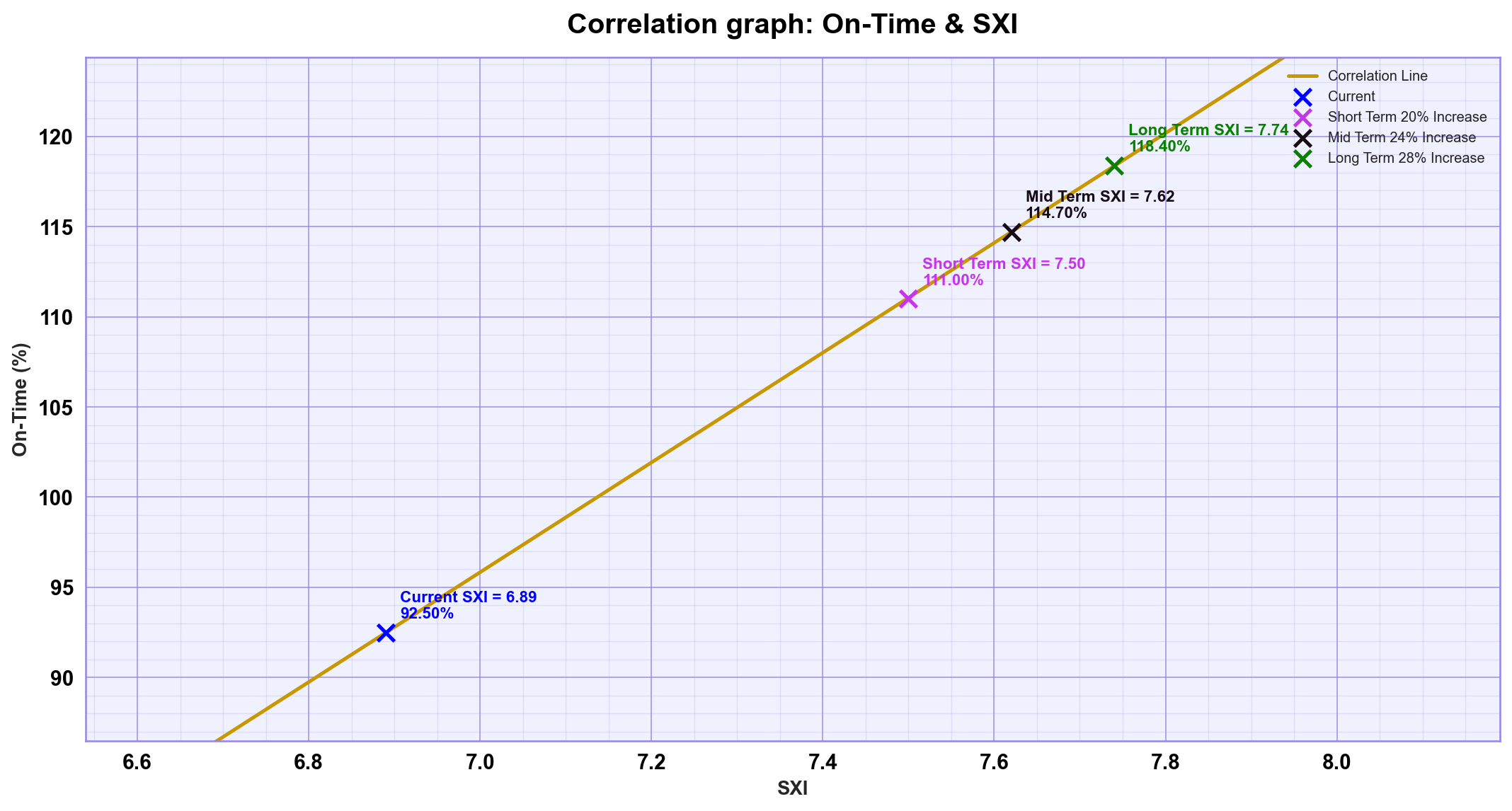
Increase on-time rate to 53,838 (111.00%) by tightening operational thresholds on Base Shipping Method Standard Ground Freight and Base Category Smart Computing.
Progress on-time rate to 55,633 (114.70%) through multi-channel orchestration and automated policy controls.
Sustain peak operational benchmark (57,428 orders at 118.40%) with self-optimizing closed-loop decision governance.

-
Node 1: Base Shipping Method Standard Ground Freight
| 20.9%
Business Insight: Volatility in transit times and lead-time variability for Base Shipping Method Standard Ground Freight directly affects the On-Time Order Rate, leading to miscalculations in delivery buffers. When carriers fail to meet expected timelines, it cascades into operational friction, resulting in delayed orders and diminished customer satisfaction.Recommendation:
To address these challenges, the Logistics & Carrier Performance Director should implement contractual OTIF compliance thresholds and automated milestone pre-alerts for Base Shipping Method Standard Ground Freight. By dynamically reallocating transit volumes to top-performing Tier-1 logistics carriers, we can secure a 20.0% improvement in the On-Time Order Rate, pushing it from a baseline of 92.5 to a target of 111.0.
-
Node 2: Base Category Smart Computing |
20.9%
Business Insight: Demand fluctuations and localized brand preferences for Base Category Smart Computing create significant clustering effects that distort the On-Time Order Rate. This variability leads to stockouts or excess inventory, complicating fulfillment efforts and negatively impacting delivery reliability.Recommendation:
The Category Inventory Strategy Lead must establish category-specific forecasting horizons and brand-level safety stock tiers for Base Category Smart Computing to effectively manage demand spikes. By optimizing safety stock levels to absorb demand variability, we can achieve a 20.0% enhancement in the On-Time Order Rate, elevating it from 92.5 to a targeted 111.0.
-
Node 3: Base Brand Solaracore | 17.4%
Business Insight: Similar to the Smart Computing category, shifts in consumer preferences for Base Brand Solaracore lead to demand clustering that adversely affects the On-Time Order Rate. This results in unpredictable inventory levels and fulfillment challenges, causing delays in order deliveries.Recommendation:
The Category Inventory Strategy Lead should implement category-specific forecasting horizons and brand-level safety stock tiers for Base Brand Solaracore to better absorb demand fluctuations. By calibrating safety stock to align with demand patterns, we can secure a 20.0% improvement in the On-Time Order Rate, raising it from 92.5 to a target of 111.0.
| # | Feature | Importance | Contribution % |
|---|---|---|---|
|
1
|
Base Shipping Method Standard Ground Freight | 20.90 | 20.9% |
|
2
|
Base Category Smart Computing | 20.85 | 20.9% |
|
3
|
Base Brand Solaracore | 17.36 | 17.4% |
|
4
|
Base City Glasgow | 13.46 | 13.5% |
|
5
|
Base Warehouse Location Hub Asiaeast | 12.89 | 12.9% |
Insight:
- Base Shipping Method Standard Ground Freight: The on-time order rate is significantly impacted by the efficiency of the Standard Ground Freight method, which has a high importance score of 20.9. Delays in this shipping method directly correlate with lower on-time performance.
- Base Category Smart Computing: The Smart Computing category shows a strong relationship with on-time order fulfillment, also holding an importance score of 20.9. Any disruptions in inventory or shipping for this category can lead to increased delays.
- Base Brand Solaracore: The Solaracore brand, with an importance score of 17.4, indicates that brand-specific logistics and supply chain issues can adversely affect on-time delivery rates, necessitating targeted improvements.
Action: Implement a focused strategy prioritizing improvements in the Standard Ground Freight method, while also enhancing logistics for Smart Computing and Solaracore products to ensure timely deliveries.
Suggestion method: The algorithm evaluates thresholds sequence and schedules priority fulfillment for orders in the risk zone, ensuring that high-impact drivers are addressed first.
Proposed solution: SXI Decision Intelligence Workflow dynamically aligning operational volumes to lock in target on-time order rates, allowing for real-time adjustments based on shipping method and category performance.
- Accuracy: Accuracy measures overall operational correctness. The percentage of all business decisions, forecasts, or classifications that are completely correct.
- Precision: Precision measures the quality and reliability of positive decisions. The fraction of positive predictions that turned out to be actual real positives (minimizing false alarms and knowing how much false alarms cost).
- Recall: Recall measures the completeness of capturing all target opportunities or risks. Out of all the actual opportunities or risks that existed, how many did we successfully catch (and how much does a missed opportunity cost us)?
- F1 Score: F1 score is a single number that balances precision and recall. It forces a compromise between Precision and Recall balancing overall performance.
- AUC: AUC measures a model's ability to rank items from "most likely" to "least likely". It tells you if your system can successfully separate the good from the bad across the board.