
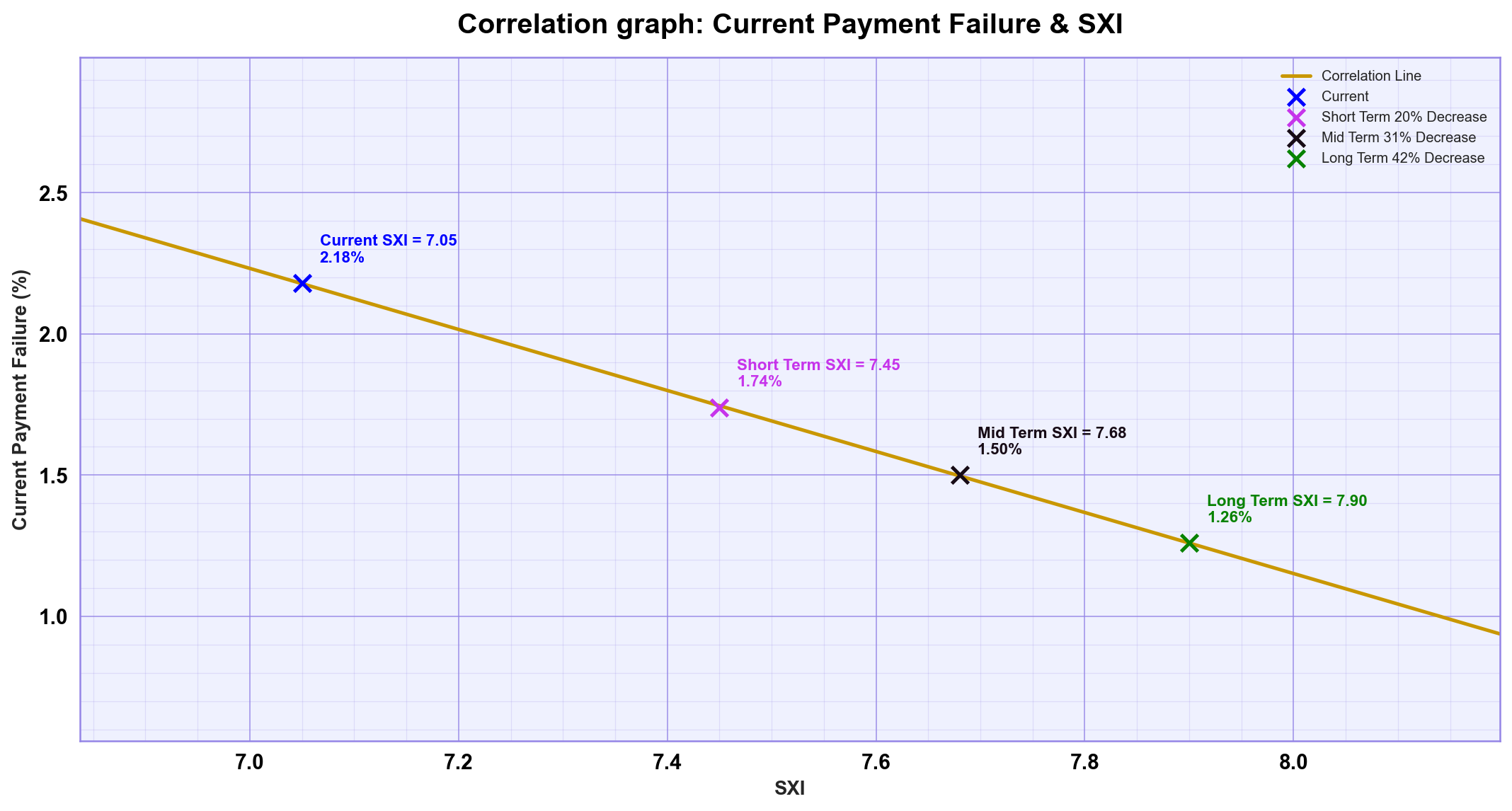
Short-term: Short-term reduction: Reduce payment failure rate from 2.2% to 1.7%. This represents a 20% reduction from the current baseline.
Mid-term: Mid-term reduction: Reduce payment failure rate from 2.2% to 1.5%. This represents a 31% reduction from the current baseline.
Long-term: Long-term reduction: Reduce payment failure rate from 2.2% to 1.3%. This represents a 42% reduction from the current baseline.

- Base Customer Segment Corporate Pro (27.7% Driver): The Base Customer Segment Corporate
Pro is characterized by unique operational requirements and expectations, leading to increased
friction and variance in the Payment Failure Rate. This segment's specific needs often result in
execution delays and misalignment with standard payment processes, causing higher decline
rates.
Business Recommendation: To mitigate the operational friction associated with the Base Customer Segment Corporate Pro, implement stringent operational thresholds and automated monitoring protocols to streamline payment processes. Establish a daily reconciliation of payment metrics and bi-weekly cross-functional audits to ensure adherence to these thresholds. Set a clear target for maintaining the Payment Failure Rate below 1.74, leveraging the 27.7% contribution to achieve the desired 20.0% reduction.
- Base Currency Gbp (25.5% Driver): Operational inconsistencies surrounding the Base
Currency Gbp contribute to a higher Payment Failure Rate due to fluctuating exchange rates and payment
processing issues. These variances can lead to miscommunication between payment gateways and financial
institutions, resulting in increased declines.
Business Recommendation: Establish strict operational thresholds and automated monitoring protocols for transactions in Base Currency Gbp to minimize execution delays and discrepancies. Implement a weekly review of currency-related payment metrics and establish an exception queue for flagged transactions to facilitate rapid resolution. Aim to maintain the Payment Failure Rate at or below 1.74 by addressing the 25.5% contribution from this currency segment.
- Base Payment Method Mastercard Identity (21.9% Driver): Friction in the checkout process
for the Base Payment Method Mastercard Identity often leads to user drop-off and increased Payment
Failure Rates. Complex checkout micro-steps and lack of streamlined payment options hinder the user
experience, directly impacting transaction success.
Business Recommendation: To enhance the checkout experience for the Base Payment Method Mastercard Identity, streamline the checkout micro-steps and introduce 1-click digital payment options while deploying real-time exit-intent interventions. Conduct daily monitoring of checkout metrics and bi-weekly audits to identify and address friction points in the payment process. Target a Payment Failure Rate of 1.74 or lower by leveraging the 21.9% contribution of this payment method to achieve the overall 20.0% reduction.
| # | Feature | Importance | Contribution % |
|---|---|---|---|
|
1
|
Base Customer Segment Corporate Pro | 27.71 | 27.7% |
|
2
|
Base Currency Gbp | 25.51 | 25.5% |
|
3
|
Base Payment Method Mastercard Identity | 21.90 | 21.9% |
|
4
|
Base Country United Kingdom | 12.56 | 12.6% |
|
5
|
Base Fraud Risk Score | 12.32 | 12.3% |
- Base Customer Segment Corporate Pro (27.7% Driver): The Corporate Pro segment shows a high correlation with payment failures, indicating that tailored verification processes for this segment could significantly reduce the failure rate.
- Base Currency Gbp (25.5% Driver): Transactions in GBP are experiencing a higher failure rate, suggesting that currency-specific verification protocols need to be enhanced to improve payment success.
- Base Payment Method Mastercard Identity (21.9% Driver): The Mastercard Identity payment method is underperforming, indicating that integration issues or user experience barriers may be contributing to declines, necessitating a review of the checkout process.