
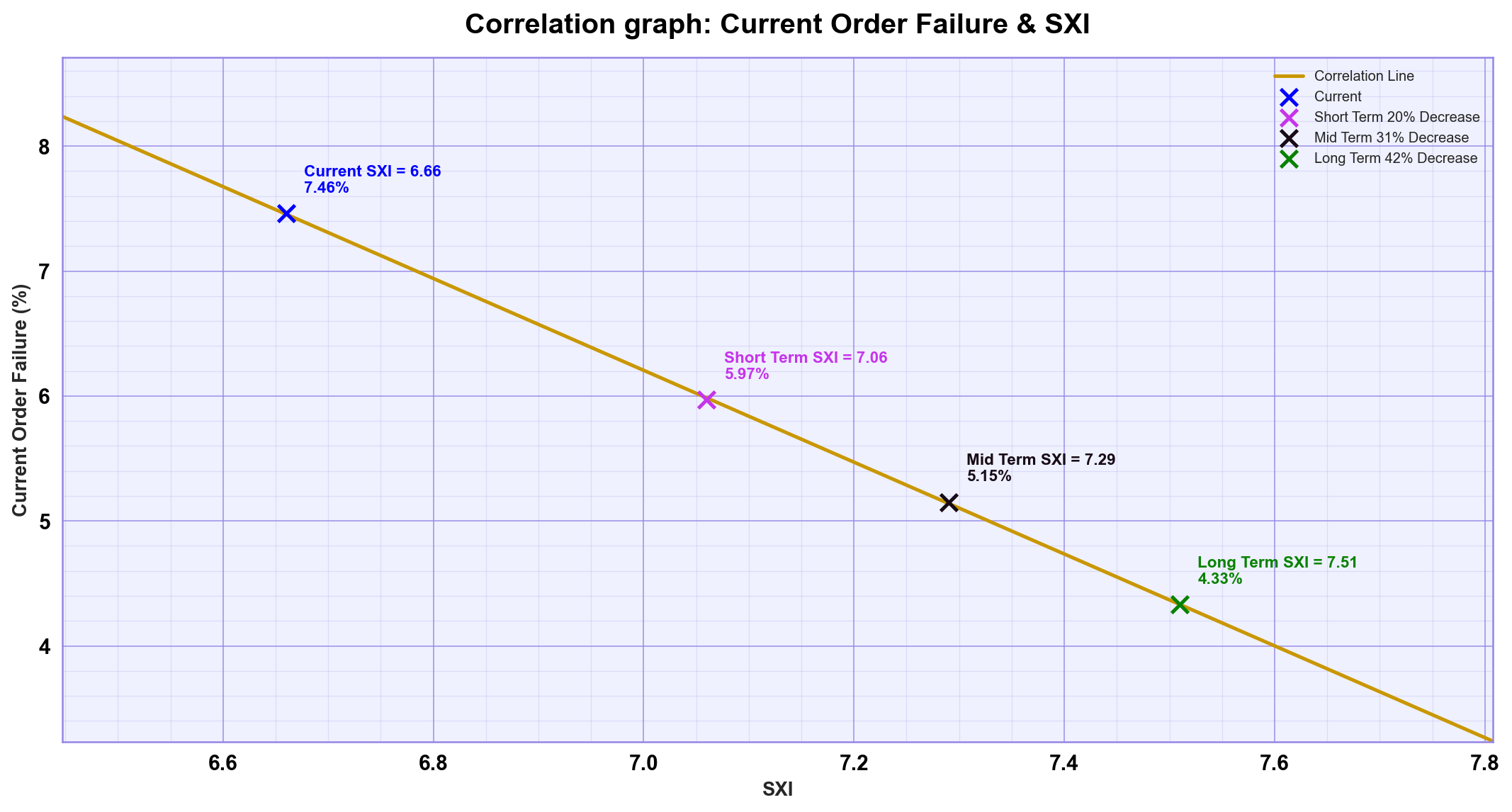
Short-term: Short-term reduction: Reduce order failure rate from 7.5% to 6.0%. This represents a 20% reduction from the current baseline.
Mid-term: Mid-term reduction: Reduce order failure rate from 7.5% to 5.2%. This represents a 31% reduction from the current baseline.
Long-term: Long-term reduction: Reduce order failure rate from 7.5% to 4.3%. This represents a 42% reduction from the current baseline.

- Base Fraud Risk Score (32.5% Driver): The Base Fraud Risk Score directly influences the
Order Failure Rate by introducing volatility in order acceptance decisions, leading to unnecessary
declines. High-risk scores often result in legitimate transactions being flagged, causing friction and
increasing the failure rate. Establishing a clear operational threshold for acceptable risk levels is
crucial for maintaining a stable order acceptance environment.
Business Recommendation: To mitigate the impact of the Base Fraud Risk Score on Order Failure Rate, the Head of Order Operations should implement a protocol that sets strict thresholds for risk assessment, ensuring that only orders with a score above 0.0 are flagged for review. A daily reconciliation of fraud metrics, complemented by bi-weekly audits across the fraud detection team, will ensure adherence to these thresholds. By calibrating the fraud risk score parameters to maintain an average score of 0.0 or lower, we can effectively achieve a 20.0% reduction in Order Failure Rate.
- Base Payment Method Mastercard Identity (25.2% Driver): Friction in the checkout process,
particularly related to the Base Payment Method Mastercard Identity, significantly contributes to cart
abandonment and a higher Order Failure Rate. Complex payment steps and lack of streamlined options
deter customers from completing their purchases, directly affecting acceptance rates. Addressing these
friction points is essential for enhancing the customer experience and improving conversion
rates.
Business Recommendation: To enhance the checkout experience and reduce friction associated with the Base Payment Method Mastercard Identity, the Conversion Rate Optimization Lead should streamline the payment process by implementing 1-click payment options and minimizing micro-steps in the checkout funnel. Weekly reviews of checkout performance metrics, along with real-time monitoring of user behavior, will help identify and address drop-off points effectively. By ensuring that the payment method acceptance rate is maintained at or below 0.2, we can secure a 20.0% reduction in Order Failure Rate.
- Base Customer Segment Corporate Pro (18.9% Driver): The Base Customer Segment Corporate
Pro presents unique operational challenges that can inflate the Order Failure Rate due to inconsistent
processing and approval workflows. Variability in order handling for corporate clients can lead to
delays and increased failure rates if not managed properly. Optimizing the operational processes for
this segment is critical to achieving a stable acceptance environment.
Business Recommendation: To optimize operations for the Base Customer Segment Corporate Pro, the Head of Order Operations should establish strict thresholds for order processing and implement automated monitoring to ensure compliance with these standards. A bi-weekly cross-functional review of corporate order metrics, combined with a dedicated exception queue for high-risk orders, will facilitate timely interventions. By aligning operational processes to ensure consistent handling of corporate orders, we can achieve a targeted reduction of 20.0% in Order Failure Rate.
| # | Feature | Importance | Contribution % |
|---|---|---|---|
|
1
|
Base Fraud Risk Score | 32.45 | 32.5% |
|
2
|
Base Payment Method Mastercard Identity | 25.24 | 25.2% |
|
3
|
Base Customer Segment Corporate Pro | 18.89 | 18.9% |
|
4
|
Fulfillment Firstuserprimarychannelgroup | 13.67 | 13.7% |
|
5
|
Base Country United Kingdom | 9.74 | 9.7% |
- Base Fraud Risk Score (32.5% Driver): The variance in the Base Fraud Risk Score indicates a direct correlation with the order failure rate, as higher scores lead to increased declines in order acceptance. By closely monitoring and mitigating fraud risk, we can significantly enhance customer order acceptance.
- Base Payment Method Mastercard Identity (25.2% Driver): The importance of the payment method, particularly Mastercard Identity, highlights that certain payment methods are more prone to fraud-related declines. Optimizing the payment acceptance process for these methods can reduce friction and improve order acceptance rates.
- Base Customer Segment Corporate Pro (18.9% Driver): The Corporate Pro customer segment shows a distinct pattern in order failures, suggesting that tailored strategies for this segment can lead to improved acceptance rates. Understanding their specific needs and behaviors will allow us to enhance our service offerings.